

A real estate website serves two very different people. Buyers and renters want to search listings quickly and save the ones they love. Sellers and landlords want to know what their home is worth and why they should choose you. The best real estate websites do both without making either one dig.
We looked at estate agents and brokerages in the US and UK, from design-led boutiques to large national firms and online agents, and picked 10 websites that handle this well. For each one, we point out the specific idea worth borrowing for your own agency website.
At a glance
| Agency | Based in | What to borrow |
|---|---|---|
| The Modern House | London, UK | Listings presented like editorial features |
| Compass | USA | A search bar that understands schools and agents |
| SERHANT. | USA | Video and media as a marketing engine |
| Foxtons | London, UK | Search by commute, school and station |
| Knight Frank | UK and global | Lifestyle searches like “coastal” or “with land” |
| Corcoran | New York and beyond | Neighbourhood guides with local experts |
| Purplebricks | UK | A fee calculator that explains the offer |
| Douglas Elliman | USA | A clear fraud warning for clients |
| Savills | UK and global | Research and a client portal |
| Hamptons | UK | A full set of property calculators |
1. The Modern House
Website: themodernhouse.com
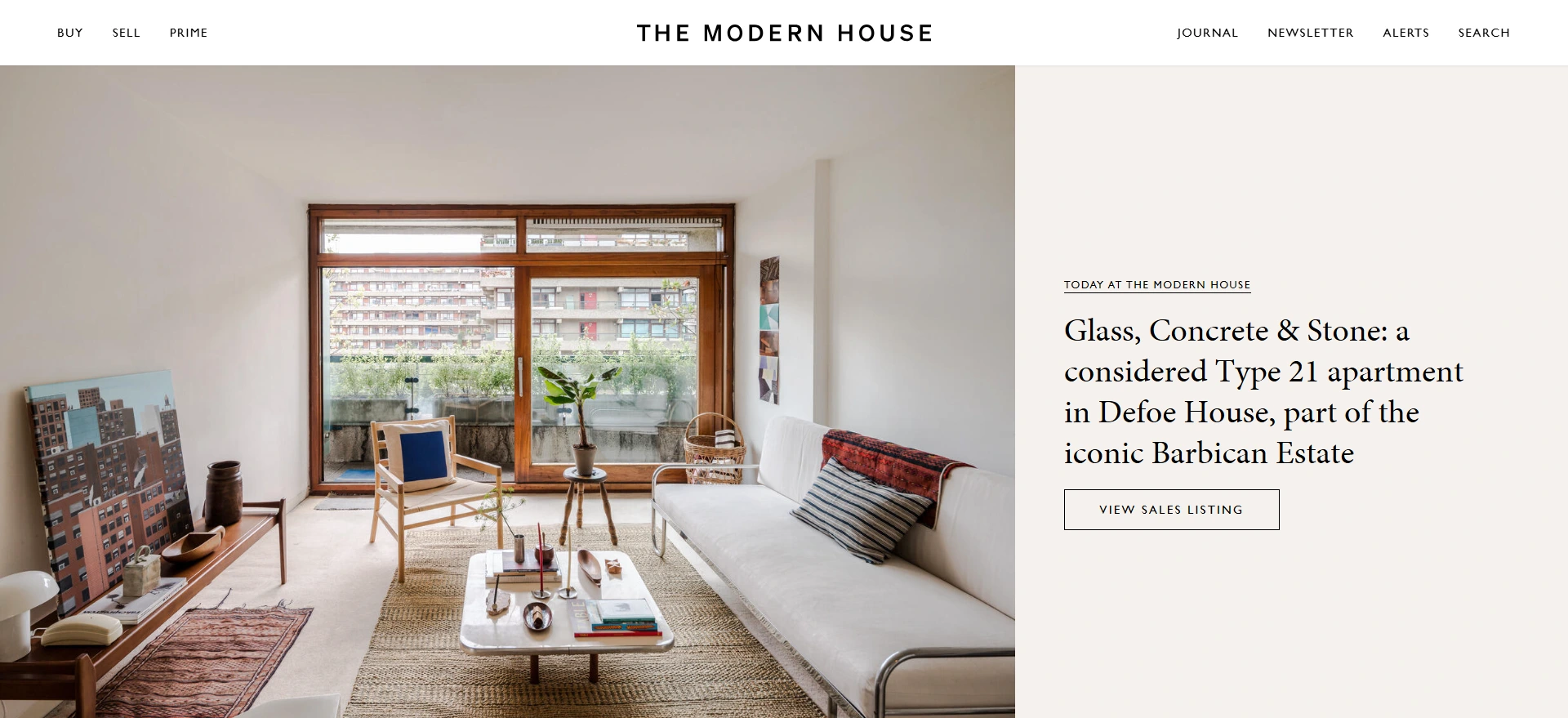
The Modern House sells design-led homes, and its website reads more like a magazine than a property portal. The homepage leads with a single featured home under “Today at the Modern House,” with a descriptive headline instead of a plain address.
Listings show price, location and tenure, and status tags like “New” and “Sold” are easy to scan. A Journal, a podcast, a newsletter and property alerts keep people coming back, and a “Past Sales” page shows the agency’s track record.
What to borrow: If you sell homes with character, describe them like stories, not spec sheets. A well-written featured listing is great content for search and social.
2. Compass
Website: compass.com
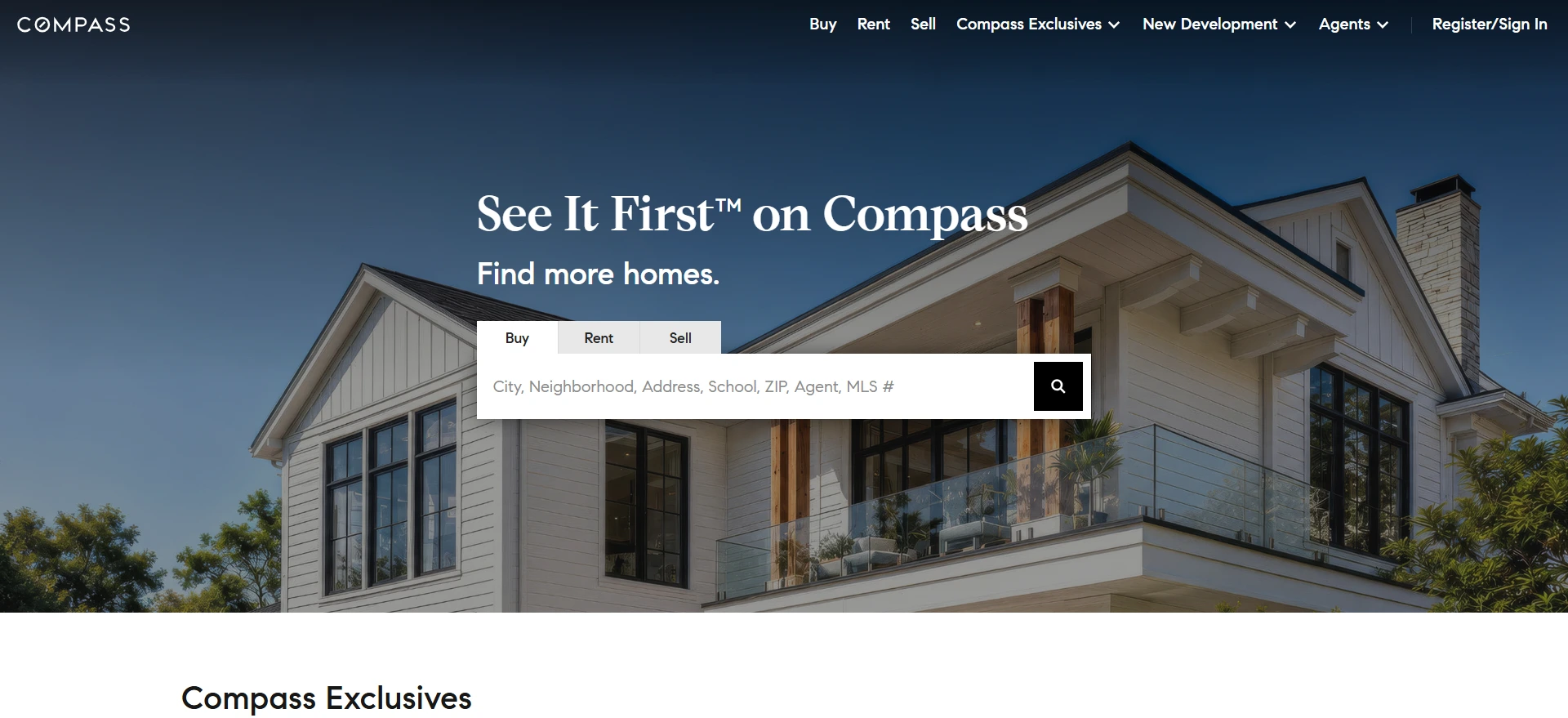
Compass leads with “See It First™ on Compass,” promoting homes buyers can see before they appear on other sites. It’s a clear reason to search on Compass rather than a big portal.
The search bar is flexible: visitors can type a city, neighbourhood, address, school, ZIP, agent or MLS number. Buy, Rent and Sell tabs sit above it, and city and state market pages help people browse by location.
What to borrow: Make your search box accept the way people actually search, including school names and neighbourhoods. And if you have exclusive or coming-soon listings, make them a headline feature.
3. SERHANT.

Website: serhant.com
SERHANT. is a brokerage and a media company, and its website shows it. Video is everywhere, from promotional banners to play buttons on new development cards, and an “In the Press” section adds credibility.
A detailed search panel with region, bed, bath and property type filters sits on the homepage, and a carousel showcases new developments across several markets. A newsletter sign-up promotes the brand’s curated listings email.
What to borrow: Use video to sell homes and introduce your team. Even short walkthroughs and agent introductions can set your listings apart.
4. Foxtons
Website: foxtons.co.uk
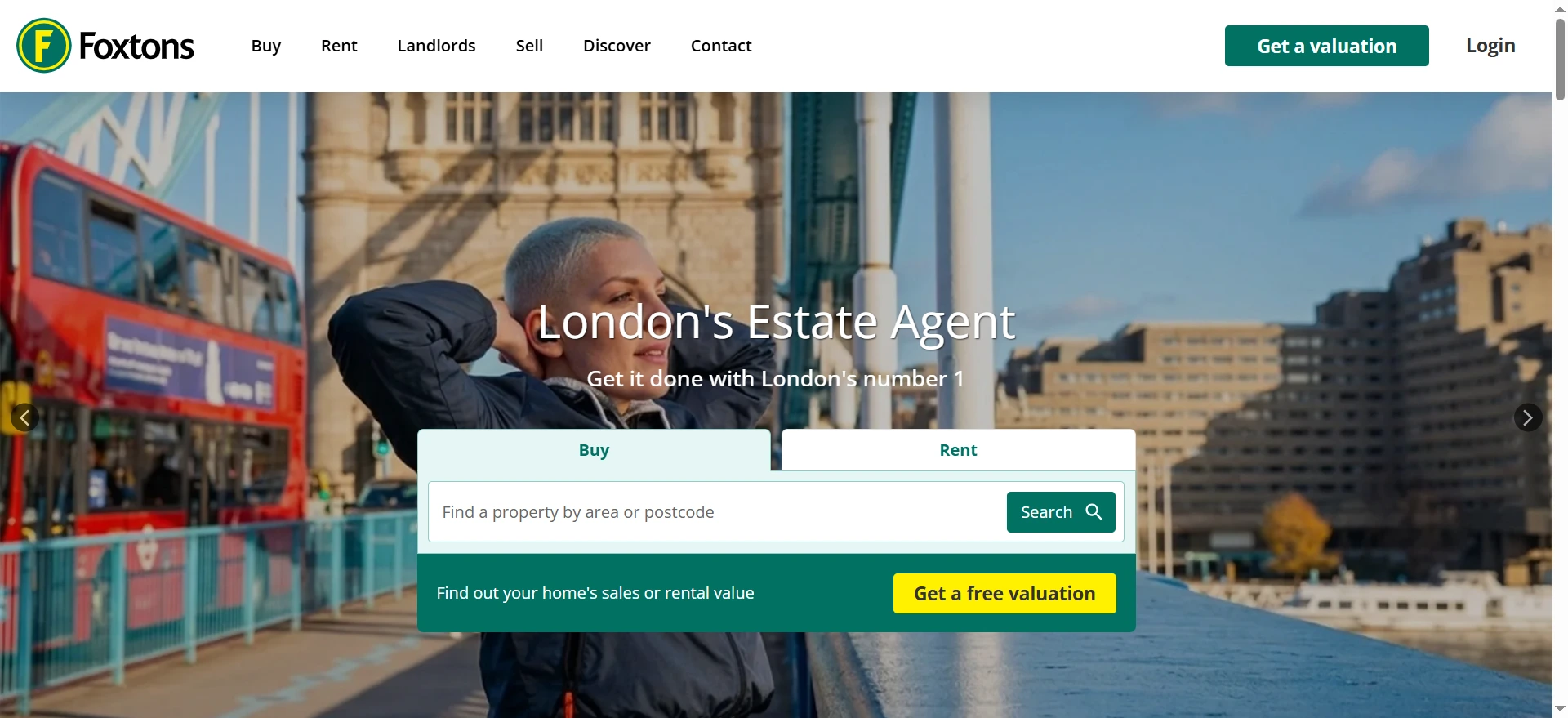
Foxtons, “London’s Estate Agent,” knows its buyers care about getting around the city. Its property search includes filters for travel time, schools, stations and “near me,” alongside a map view.
Separate menus serve buyers, renters, landlords and sellers, and “Get a free valuation” is the main action for owners. A My Foxtons account offers real-time updates and document signing, and contact hours are listed clearly.
What to borrow: Add search filters that match your market. In a city, commute time and transport links often matter more than the number of bedrooms.
5. Knight Frank
Website: knightfrank.co.uk
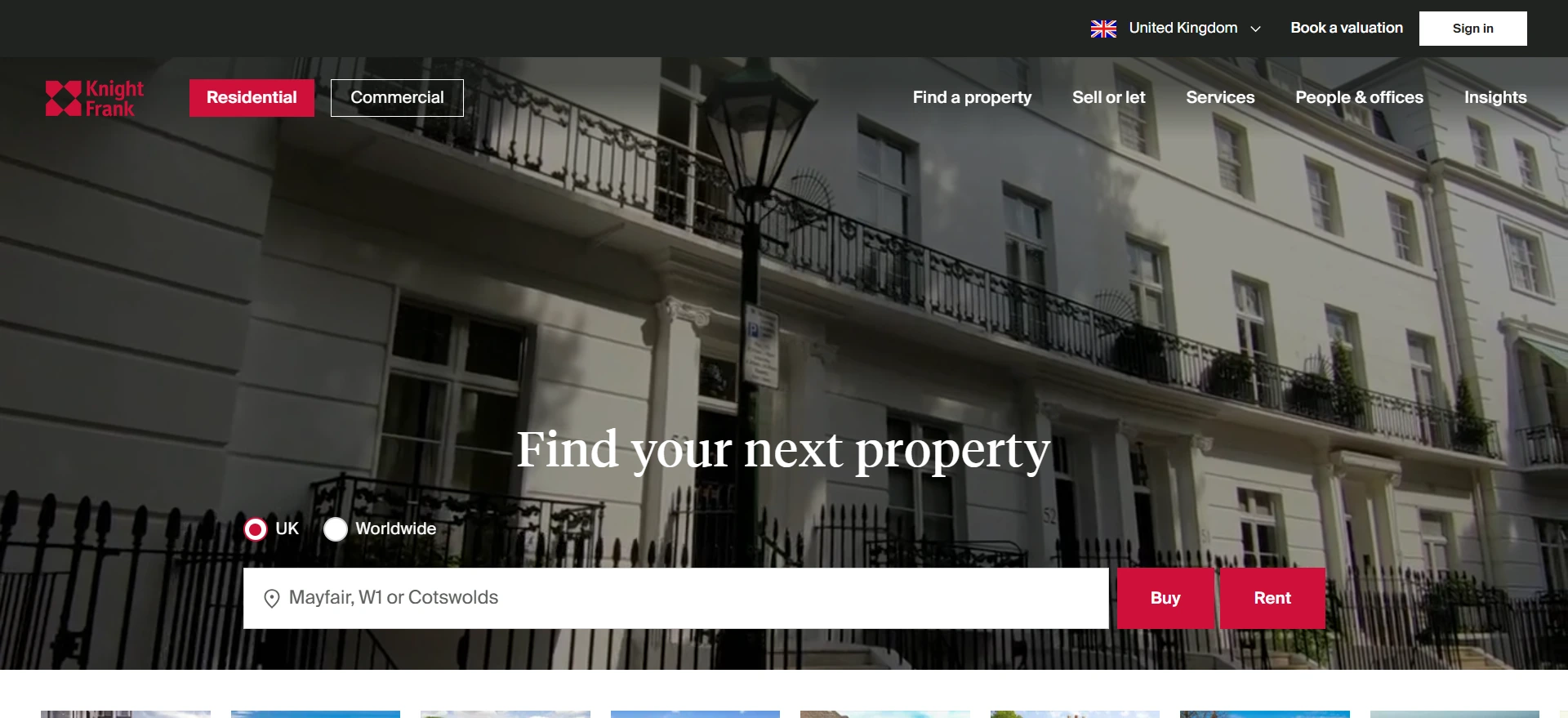
Knight Frank’s property menu goes beyond “for sale” and “for rent.” Visitors can browse by lifestyle, such as coastal properties, homes with land, village homes, London commute, Thameside living and homes with a swimming pool.
“Book a valuation” sits in the header, offices are listed for London and the country, and a research section publishes reports and insights. A UK/Worldwide toggle sits right in the search area.
What to borrow: Create collections based on lifestyle, not just location. “Homes with a garden near good schools” is how many buyers actually think, and each collection can rank for its own searches.
6. Corcoran
Website: corcoran.com
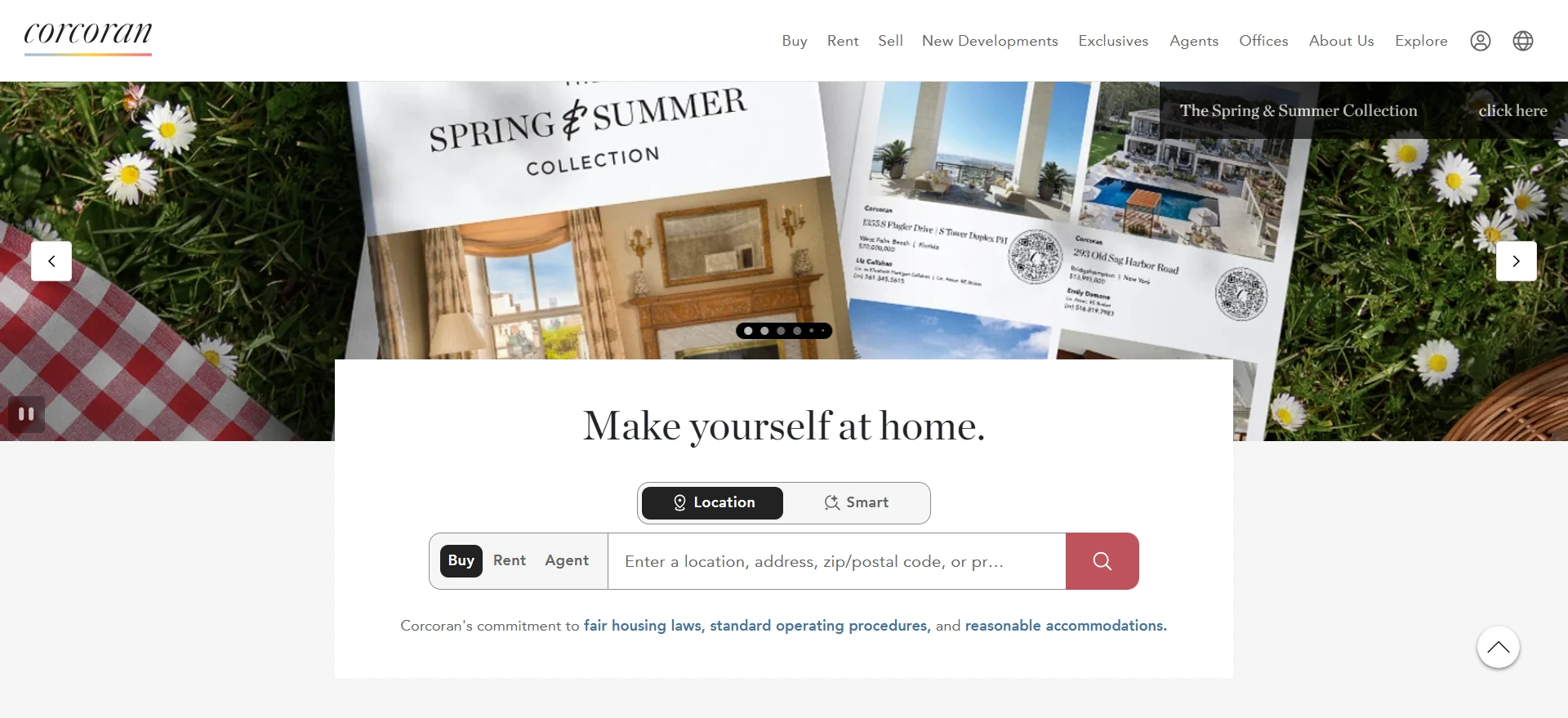
Corcoran’s homepage headline is “Make yourself at home,” and the site helps people get to know an area before they buy. A “Find your neighborhood” section invites visitors to explore the areas Corcoran serves and connect with local experts.
The search box handles homes and agents in one place, trending homes are shown with prices, and market reports share the company’s own analysis. Offices and agents each have their own sections.
What to borrow: Write neighbourhood guides for the areas you cover. They answer what buyers really want to know (schools, transport, lifestyle) and show your local expertise.
7. Purplebricks
Website: purplebricks.co.uk
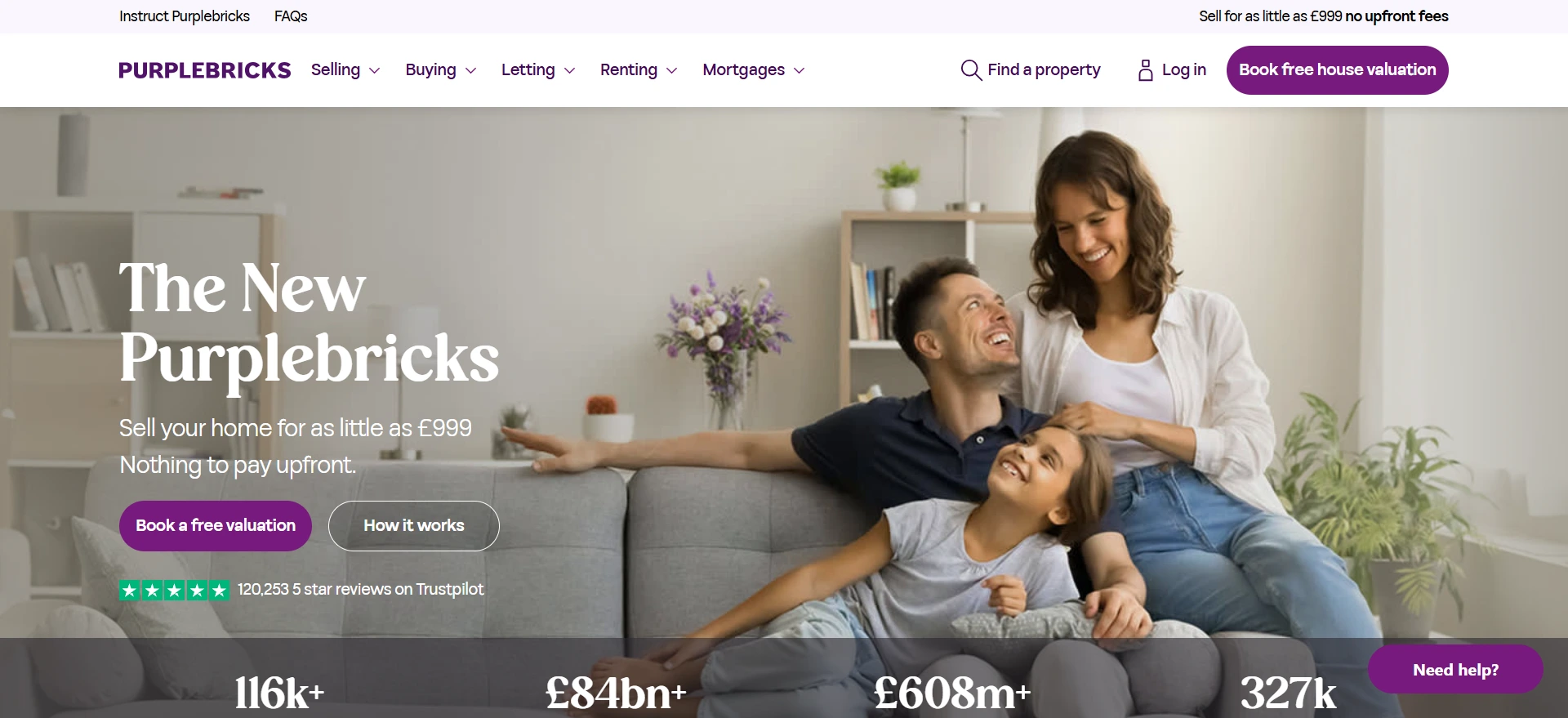
Purplebricks sells homes for a fixed fee, and its homepage explains the offer with a calculator. Enter a home’s value and it compares a typical high street commission with the fixed fee, with the assumptions explained in the fine print.
A “What’s included?” list covers valuation, photos and floor plans, portal listings, viewings and sales progression. “Book a free valuation” is repeated throughout, and visitors can start by entering their postcode.
What to borrow: If your pricing is different, explain it with a simple calculator or example. Showing the numbers is more convincing than claiming you’re good value.
8. Douglas Elliman

Website: elliman.com
Douglas Elliman’s homepage asks “Where do you want to go?” and offers a search for luxury homes, exclusive listings and new developments. Resources include market reports, research reports and magazines.
The site also includes a clear fraud warning: scammers have impersonated agents, and the company says it will never ask for payment to reserve, hold or view a property. It’s a simple, responsible addition that protects clients.
What to borrow: If scams target your market, warn people clearly on your website. Telling clients what you will never ask for builds trust.
9. Savills
Website: savills.co.uk
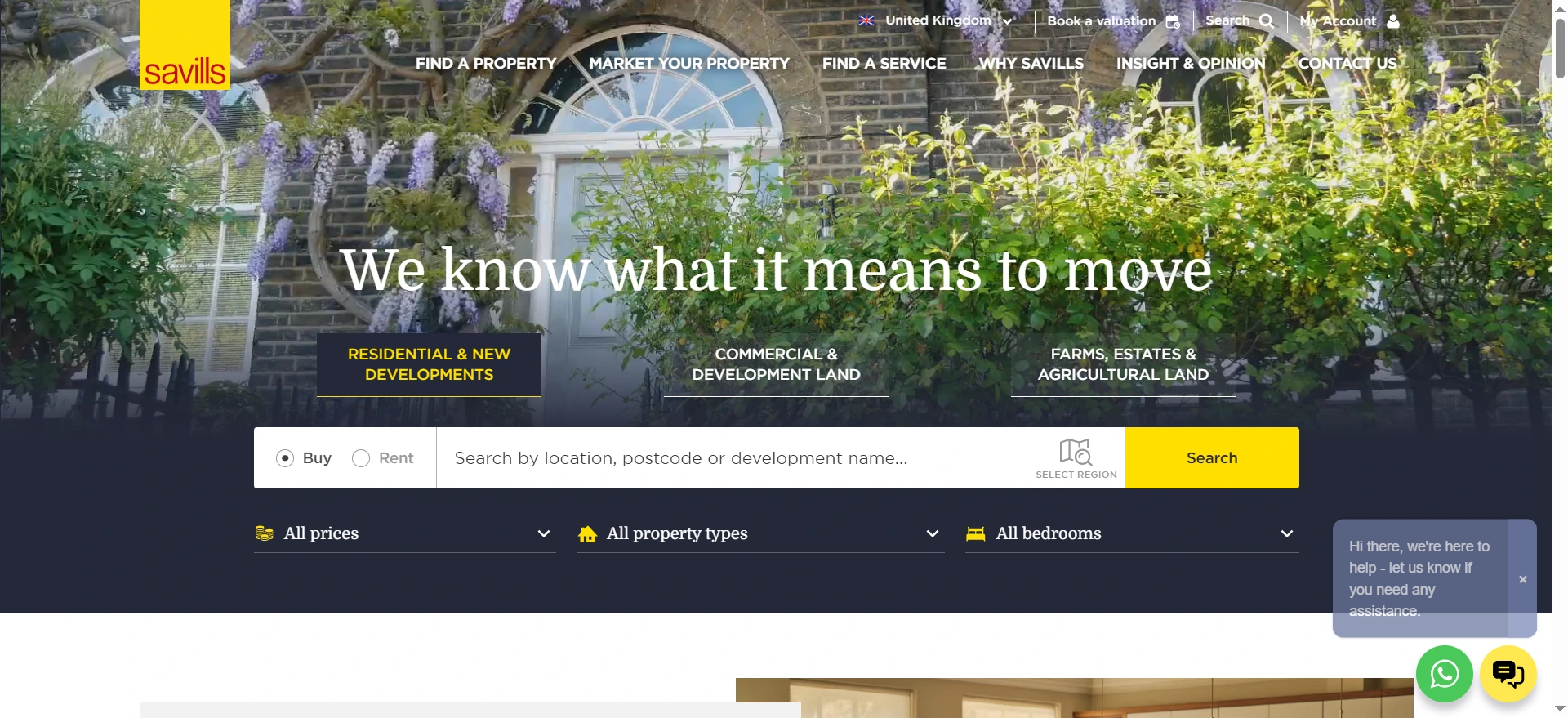
Savills’ homepage headline is “Here to help you thrive,” and the site covers residential, rural and commercial property in one place. Research is a major feature, with reports across many property sectors.
Owners can book a valuation, including a virtual option, and MySavills lets clients track their sales and lets online. Calculators, local price tools, auctions and a lifestyle magazine round out the site.
What to borrow: Give clients a way to track progress online. A simple portal or regular status updates reduce “any news?” calls and make clients feel looked after.
10. Hamptons

Website: hamptons.co.uk
Hamptons calls itself “a local estate agency like no other,” and its website backs up the local promise with a branch finder and branch listings. “Book a free valuation” appears throughout the site.
A set of calculators covers mortgages, stamp duty, buy-to-let stamp duty and capital gains tax, and a recently sold section shows homes under offer. Research reports and area guides add useful content for buyers and landlords.
What to borrow: Add calculators for the costs your clients worry about. Tools like a stamp duty or mortgage calculator are useful, shareable and bring people back to your site.
What every real estate website needs
Across these 10 sites, the same basics come up again and again:
- Fast, flexible property search. With filters that match your market, a map view and saved searches or alerts.
- A clear valuation offer. “Book a free valuation” should be easy to find for sellers and landlords.
- Separate paths for each audience. Buyers, renters, sellers and landlords all need different information.
- Great listing pages. Quality photos, floor plans, video, descriptions and clear calls to action.
- Local content. Neighbourhood guides, market reports and recently sold homes show your expertise.
- Agent and office pages. Photos, contact details and areas covered help people choose who to call.
- Real estate schema. Structured data (RealEstateAgent for your agency and RealEstateListing for listings) helps search engines understand your business and properties.
Looking for more inspiration? See our lists of the best law firm websites and the best dental websites for other businesses that win clients through trust.
How much does a real estate website cost?
It depends mostly on your listings. A simple agency site with team, services and a valuation form is a much smaller project than a site with a live property feed from your CRM, map search, saved searches and many area guides. The integration with your property software is usually the biggest factor.
If you’re planning a new real estate website or a redesign, tell us about your project and we’ll give you a clear, fixed-price quote.
Frequently asked questions
What should a real estate website include?
Property search with useful filters, detailed listing pages, a valuation request form, agent and office pages, neighbourhood guides and clear contact options for buyers, renters, sellers and landlords.
Can a WordPress website show my property listings?
Yes. Most property CRMs and MLS providers offer a feed or plugin that can display listings on a WordPress site, with search filters and individual property pages.
How can a real estate agency get more valuation requests?
Make “Book a free valuation” visible on every page, show recently sold homes and client reviews, publish local market updates, and keep the valuation form short.
How does local SEO work for estate agents?
Keep your name, address and phone number consistent for each office, keep your Google Business Profiles updated, create pages for the areas you cover, collect reviews, and add RealEstateAgent schema to your site.
Planning a real estate website? PosySites designs and builds WordPress websites for estate agents and property businesses, with local SEO built in from the start. Start a project.
