

Every hotel website has the same tough competitor: the big booking platforms. Guests can find your rooms on an online travel agency in seconds, so your own site has to give them a reason to book direct. The best hotel websites do it with a fast booking widget, clear direct-booking perks and a real sense of what staying there feels like.
We looked at boutique hotels, luxury resorts and historic city hotels in Europe and the US, and picked 10 websites that handle this well. For each one, we point out the specific idea worth borrowing for your own hotel website.
At a glance
| Hotel | Type | What to borrow |
|---|---|---|
| The Hoxton | Boutique hotels, Europe and USA | Direct-booking perks spelled out |
| Ace Hotel | Lifestyle hotels, global | An events calendar that sells the vibe |
| The Standard, High Line | Design hotel, New York | A one-page property guide with FAQ |
| Aman | Luxury resorts, global | Experiences menu beyond rooms |
| Six Senses | Wellness resorts, global | Wellness programs packaged as cards |
| Firmdale Hotels | Boutique hotels, London and New York | “Book a Room” and “Book a Table” side by side |
| THE PIG | Country house hotels, UK | Food story and map of every location |
| Hotel Sacher | Historic hotel, Vienna | A detailed FAQ for practical questions |
| Hotel Chelsea | Historic hotel, New York | A filterable neighborhood guide |
| Graduate Hotels | College-town hotels, USA and UK | Brand story told as a timeline |
1. The Hoxton
Website: thehoxton.com
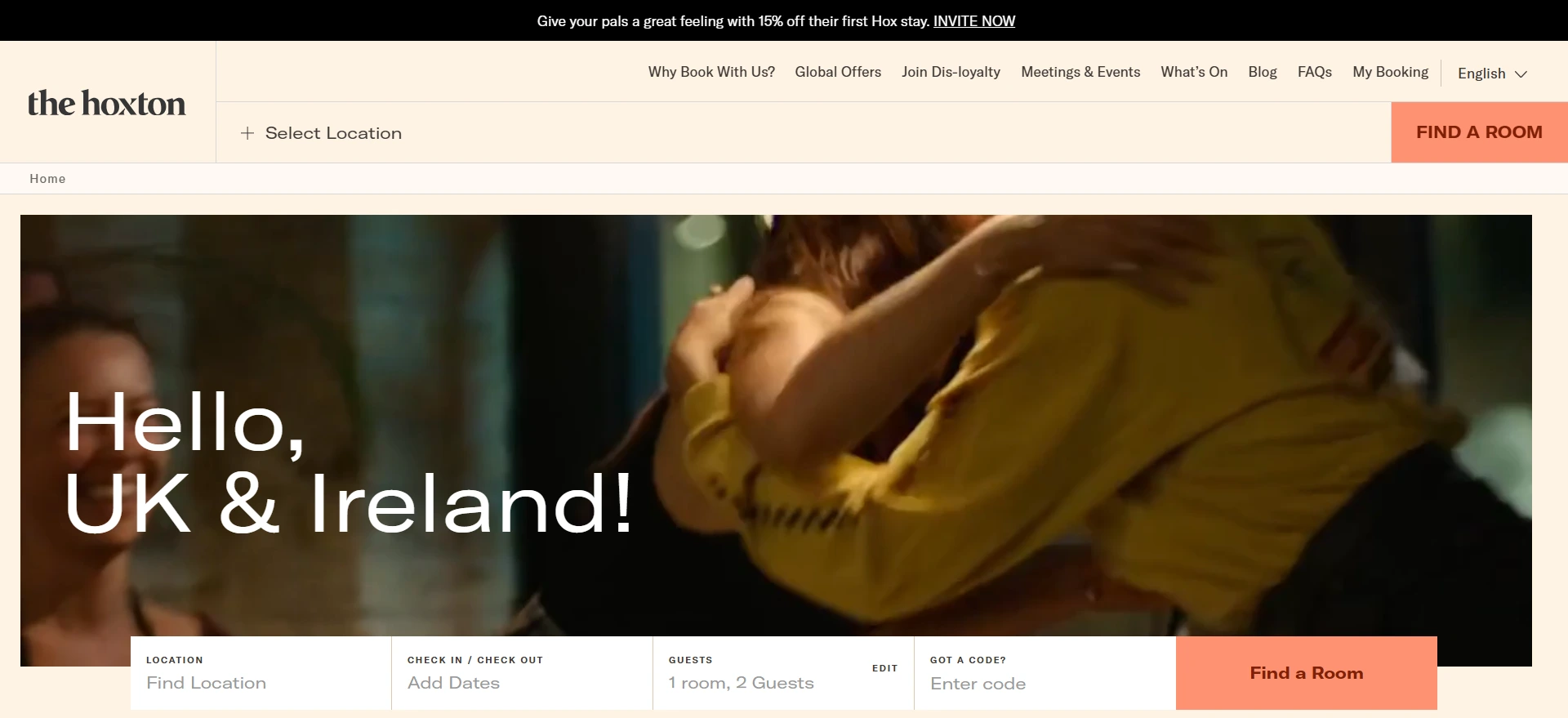
The Hoxton answers the “why book direct?” question better than most. A “Why Book With Us?” link sits in the top menu, and the perks are specific: free early check-in and late check-out through “Flexy Time,” and free cancellation until 2pm the day before arrival.
Each property page feels local. The Shoreditch page opens with “Hello, Shoreditch!”, describes rooms from “Shoebox to Roomy,” and ends with a neighbourhood guide to nearby coffee, markets and restaurants. A “Find a Room” panel stays close at hand throughout.
What to borrow: List your direct-booking perks by name and put them in the main menu. A late check-out or flexible cancellation is a concrete reason to skip the booking platforms.
2. Ace Hotel

Website: acehotel.com
Ace Hotel presents itself as “a collection of international lifestyle hotels,” and the homepage proves it with a “Goings on” calendar. DJ nights, exhibitions, yoga and brunches across its cities show visitors what’s happening this week, not just what the rooms look like.
The “Book Now” form sits right on the homepage, with a field for promo or corporate codes. Offers are listed clearly, from member rates to longer-stay deals, and an A-List sign-up promises a discount on a future stay in return for an email address.
What to borrow: Publish your events on your website. A live calendar gives guests a reason to visit (and locals a reason to come back), and it keeps your site fresh for search engines.
3. The Standard, High Line
Website: standardhotels.com
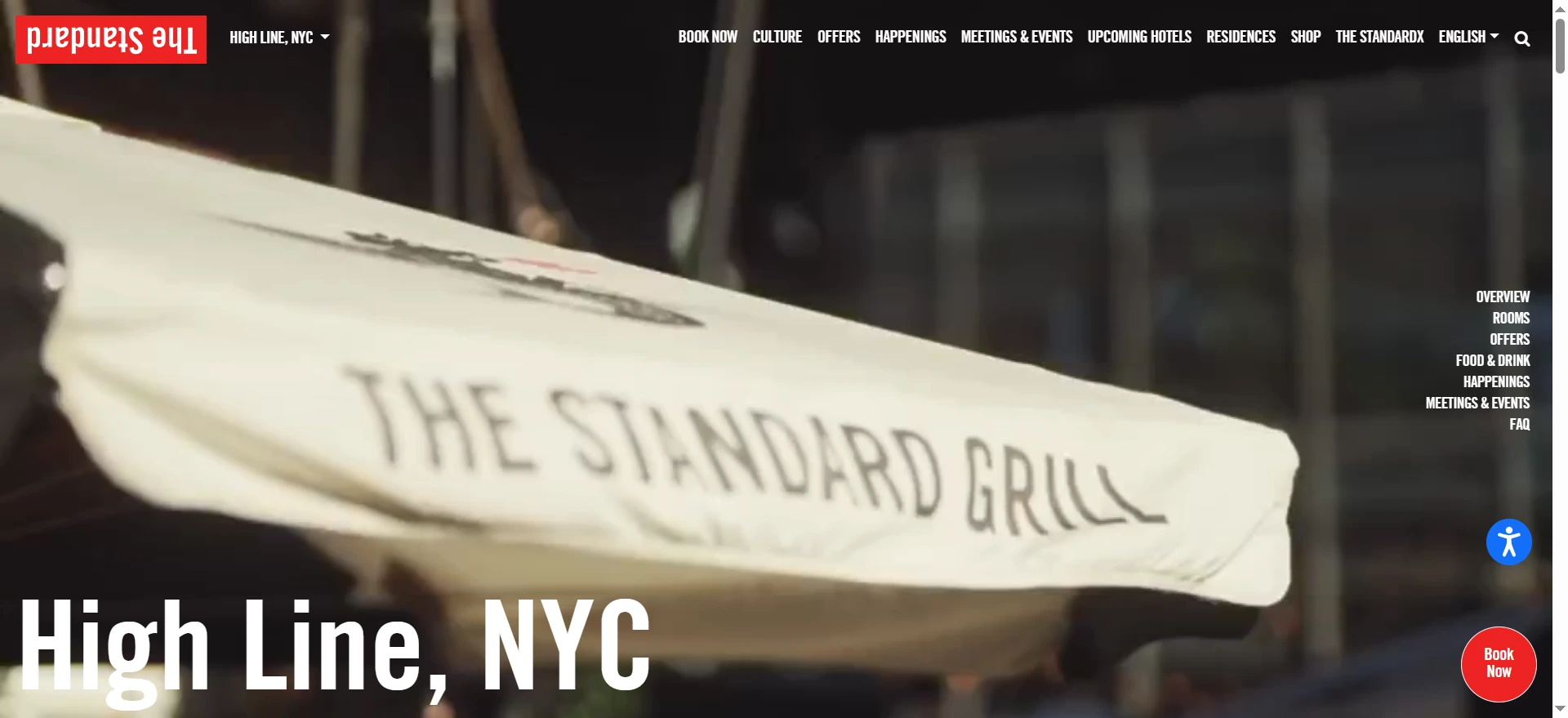
The Standard’s property page works like a complete guide to the hotel on one scrolling page. Anchor links jump to Overview, Rooms, Offers, Food & Drink, Happenings, Meetings & Events and FAQ, so guests can go straight to what they care about.
Room types are listed with sizes and features, the bars and restaurants each get their own entry with hours, and press quotes add credibility. The FAQ handles the practical questions, such as parking, which rooms have tubs and how deposits work.
What to borrow: Add a short FAQ to every property page. Questions about parking, deposits and check-in times are asked again and again, and answering them on the page saves phone calls.
4. Aman
Website: aman.com
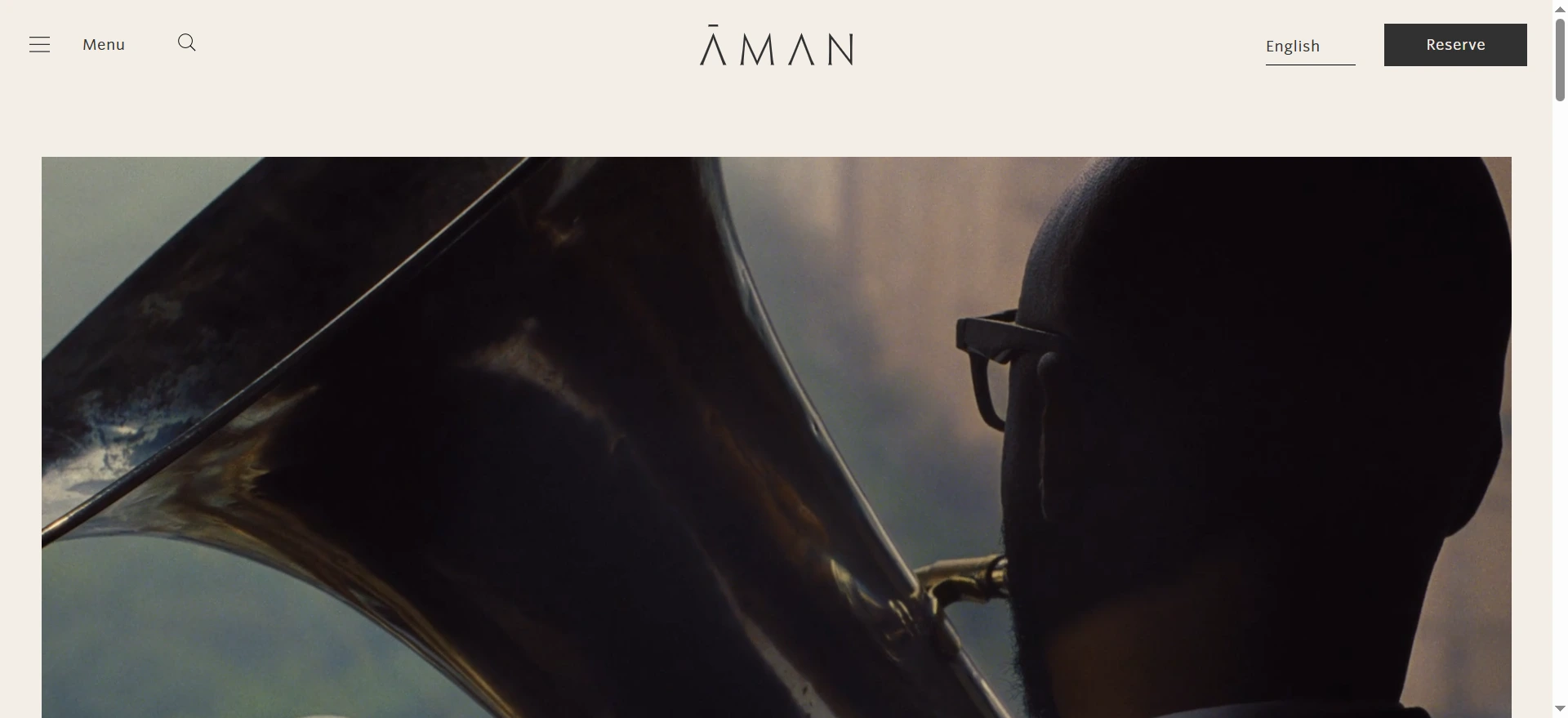
Aman sells journeys, not just rooms. Alongside “Destinations,” the main menu has an “Experiences” section covering wellness, dining, culture, celebrations, active adventures and more, which helps guests imagine the whole trip.
A single “Reserve” button stays at the top of the page, and destinations are organised by region. New openings are flagged clearly, and a newsletter sign-up invites people to “Get inspired” with updates on experiences and new destinations.
What to borrow: Give your experiences their own section, whether that’s spa treatments, tours or private dining. Guests often choose a hotel for what they can do there, not only where they sleep.
5. Six Senses

Website: sixsenses.com
Six Senses is known for wellness, and its resort pages make that easy to explore. At Crans-Montana, wellness programs such as Sleep, Detox and Fitness appear as simple cards, each with a short description and a “View wellness program” link.
Treatments are described in a paragraph each, facilities and opening hours are listed clearly, and a “Book a consultation” link sits next to personalised options like wellness screening. A “Check availability” panel and a “Book now” button keep booking close.
What to borrow: Package your services into named programs with short descriptions. “Sleep program” or “Weekend reset” is easier to choose, and easier to rank for, than a long treatment menu.
6. Firmdale Hotels

Website: firmdalehotels.com
Firmdale’s header puts “Book a Room” and “Book a Table” side by side. That small choice recognises that many visitors come for the restaurants and bars, not just a night’s stay.
The design story is front and centre too: each hotel is described as individually designed and decorated by Kit Kemp, who has her own section on the site. A “What’s On” listing covers dinners, workshops and live music, and a journal shares recipes and stories.
What to borrow: If your restaurant or bar is open to non-guests, give table bookings equal billing with room bookings. It’s an extra revenue stream your website can serve every day.
7. THE PIG

Website: thepighotel.com
THE PIG builds its brand around food, and its website tells that story with phrases like its “25 mile restaurant menu” and kitchen garden dishes. It’s a clear, memorable reason to choose these hotels.
Every location is shown in both map and list views, with upcoming openings marked “coming soon,” and a “Can’t decide which PIG?” section helps guests compare. A seasonal midweek offer and a “Just Dropping In” day-visit option add more ways to visit.
What to borrow: Find the one story that makes your hotel different, whether it’s local food, design or history, and tell it everywhere. A clear story is what guests remember and repeat to friends.
8. Hotel Sacher
Website: sacher.com
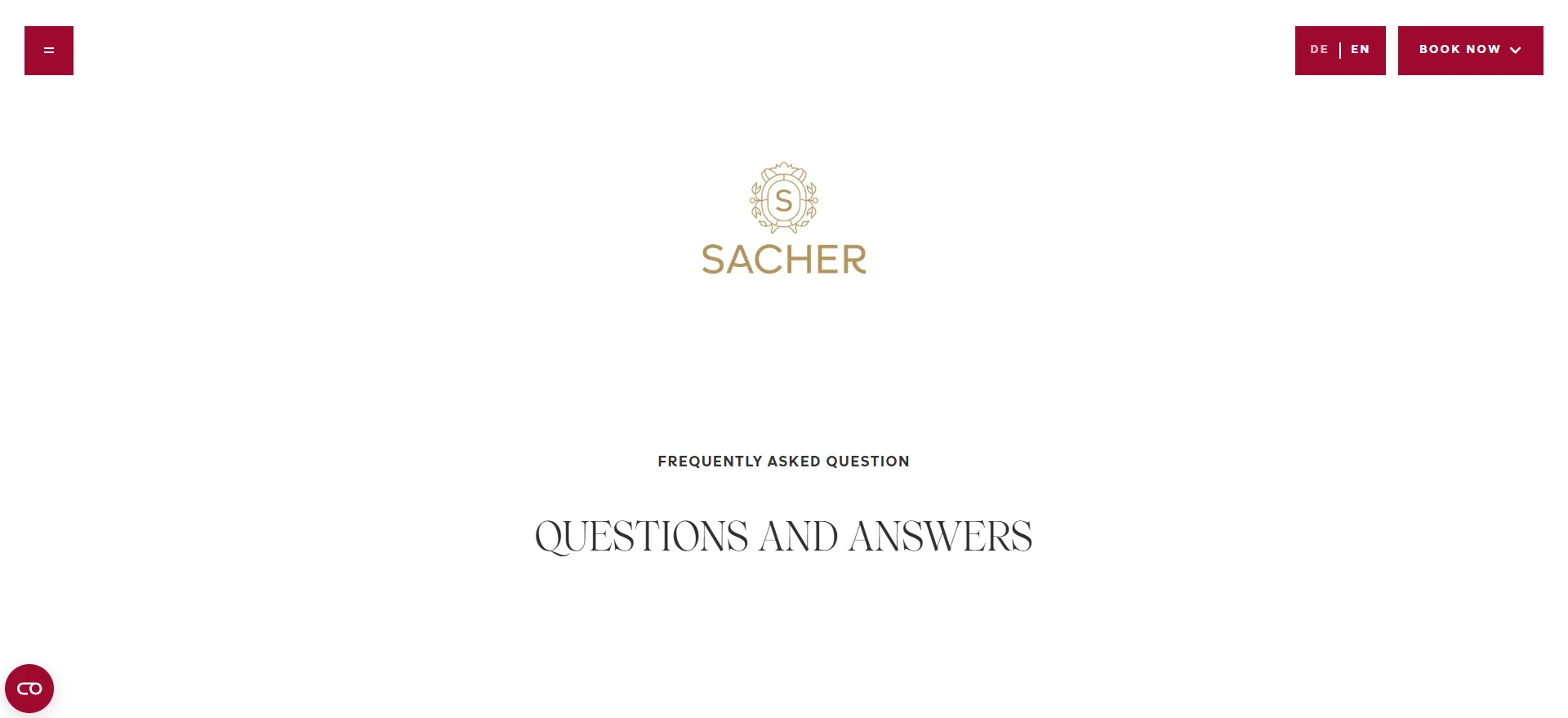
Hotel Sacher in Vienna is a historic hotel, but its website is very practical. A detailed FAQ covers transport, parking, accessibility, check-in times, payment, room categories, dining hours and the spa, so guests can plan without picking up the phone.
A “Book Now” button sits in the header, the group’s other hotels in Salzburg and Seefeld are linked, and restaurants and cafés each have their own pages. The famous Sacher-Torte can even be ordered through an online shop.
What to borrow: Build a proper FAQ page and mark it up with FAQ schema. It answers the questions guests ask before booking and can help your answers appear directly in search results.
9. Hotel Chelsea
Website: hotelchelsea.com
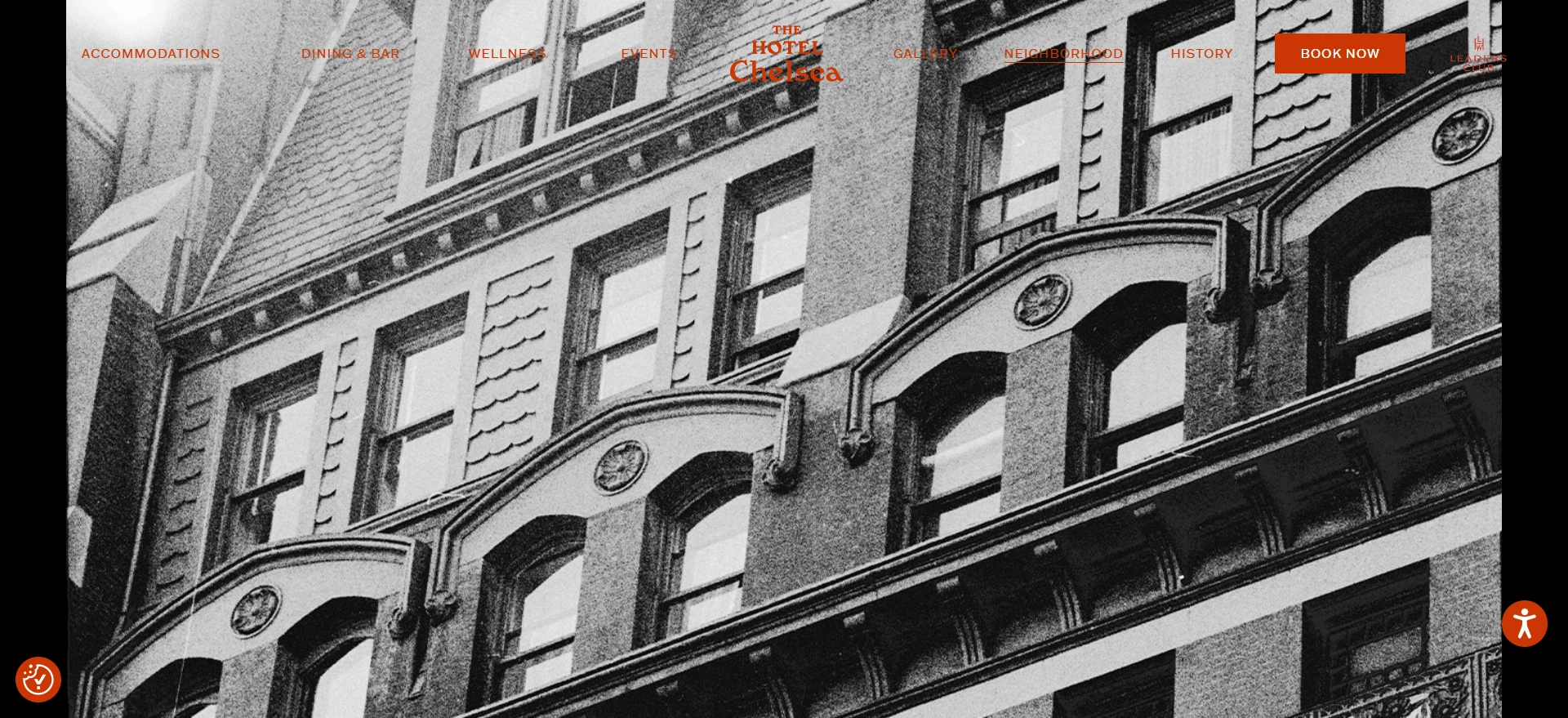
Hotel Chelsea leans into its location and history. Its neighborhood page invites guests to explore the area’s local “institutions,” with filters for restaurants, bars, galleries, theatre, music, shopping and parks.
A dedicated History page tells the building’s story, and the “Make a Booking” widget handles both room stays and restaurant reservations. Rooms, dining, wellness and events each have clear menu links.
What to borrow: Write a neighbourhood guide with useful categories. It helps guests plan their stay and gives you content that ranks for searches like “things to do near [your area].”
10. Graduate Hotels
Website: hilton.com/graduate
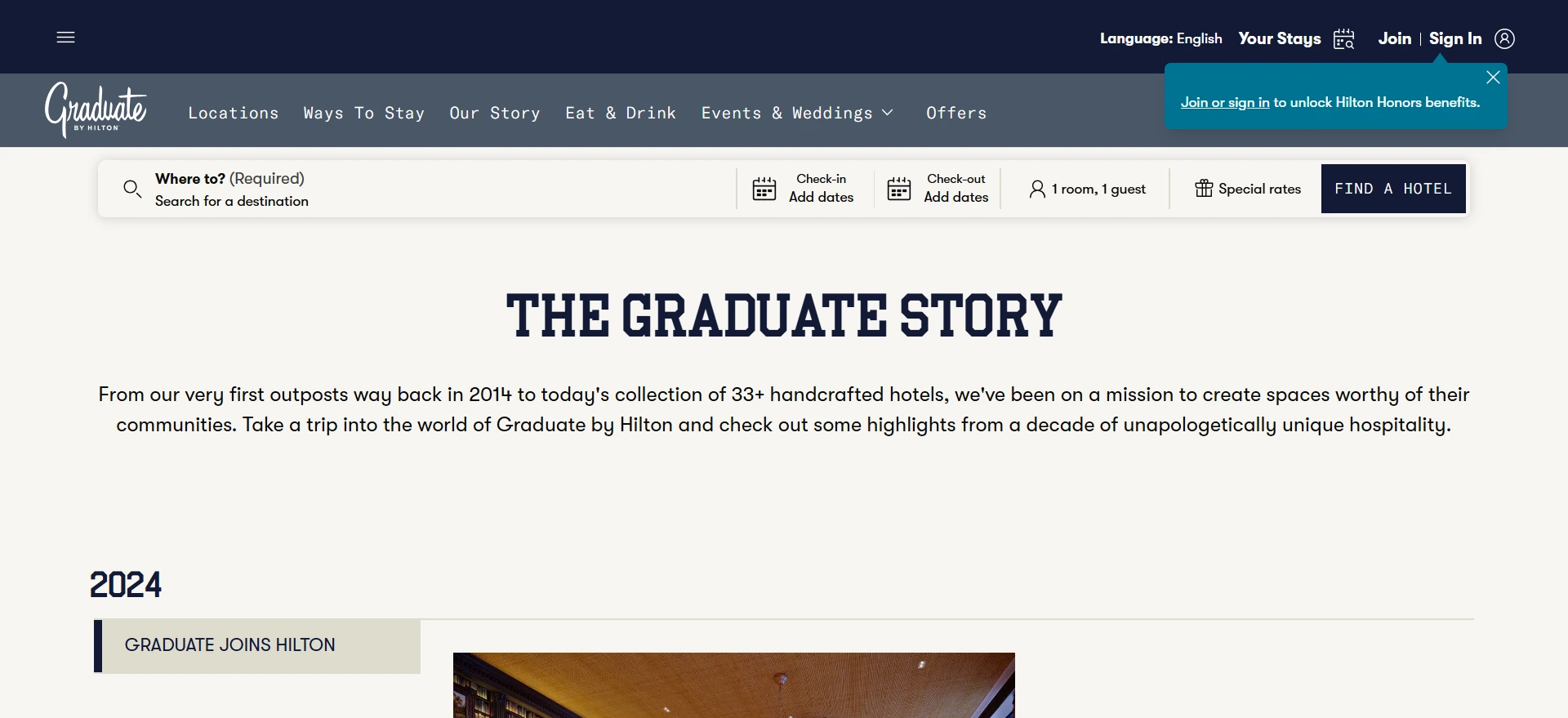
Graduate Hotels, now part of Hilton, tells its brand story as a year-by-year timeline, from its first college-town hotels in 2014 to its later openings in the US and UK. It’s an easy, scannable way to show how a brand has grown.
The timeline also highlights the details that make each hotel memorable, such as themed suites and local partnerships. A “Find a hotel” search with dates and special rates sits at the top, with a phone line for anyone who prefers to call.
What to borrow: Tell your hotel’s story in a simple timeline. Opening dates, renovations and milestones show your history at a glance, and they work well on an “About” page.
What every hotel website needs
Across these 10 sites, the same basics come up again and again:
- A booking widget on every page. Dates and guests in one quick form, connected to your booking engine.
- Clear direct-booking perks. Flexible cancellation, late check-out or member rates, explained in plain words.
- Detailed room pages. Real photos, sizes, bed types and amenities for each room type.
- Food, drink and experiences. Restaurant, bar, spa and activity pages, with table bookings where possible.
- Local content. A neighbourhood guide and an events calendar give guests (and search engines) more reasons to visit.
- A practical FAQ. Parking, check-in times, pets, deposits and accessibility, answered on the page.
- Hotel schema. Structured data for your property (Hotel is a schema.org type) helps search engines understand your address, rooms and amenities.
Looking for more inspiration? See our lists of the best restaurant websites and the best coffee shop websites for other hospitality businesses.
How much does a hotel website cost?
It depends on the size of the property and the integrations you need. A small boutique hotel with a few room pages and a booking engine link is a much smaller project than a hotel group with several properties, restaurant bookings, events calendars and multiple languages.
If you’re planning a new hotel website or a redesign, tell us about your project and we’ll give you a clear, fixed-price quote.
Frequently asked questions
What should a hotel website include?
A booking widget, room pages with photos and amenities, direct-booking perks, dining and experience pages, a location and neighbourhood guide, an FAQ, contact details and guest reviews.
How can a hotel get more direct bookings from its website?
Make booking fast on mobile, explain the perks of booking direct, show real photos and room details, keep rates consistent with the booking platforms, and use email sign-ups to bring past guests back.
Can a WordPress website connect to my hotel booking engine?
Usually, yes. Most hotel booking engines and channel managers offer a booking widget or link that can be added to a WordPress site, so guests can check availability without leaving your brand.
How does local SEO work for hotels?
Keep your Google Business Profile updated with photos, amenities and accurate details, collect reviews, create pages for your rooms, dining and local area, and add Hotel schema to your website.
Planning a hotel website? PosySites designs and builds WordPress websites for hotels and hospitality businesses, with local SEO built in from the start. Start a project.
