

A coffee shop website has two audiences. Some visitors want to know where you are and when you open. Others want to buy a bag of beans, start a subscription or book a class. The best coffee websites serve both without making either one dig.
We looked at specialty cafés and roasters in the US, UK and Australia and picked 10 websites that get this balance right. Some are small, some are national brands, and each one does at least one thing your coffee shop website can learn from.
At a glance
| Coffee shop | Based in | What to borrow |
|---|---|---|
| Onyx Coffee Lab | Arkansas, USA | Coffee pages that tell the full story |
| Blue Bottle Coffee | California, USA | Subscription perks spelled out clearly |
| Monmouth Coffee | London, UK | A simple site built around the coffee |
| Proud Mary | Melbourne, Australia | Café hours right on the homepage |
| Counter Culture | North Carolina, USA | Transparency that builds trust |
| Verve Coffee Roasters | California, USA | A quiz that helps people choose |
| Market Lane | Melbourne, Australia | Classes and content beyond the shop |
| Ritual Coffee | San Francisco, USA | A “Visit” menu for every café |
| La Colombe | Philadelphia, USA | Ready-to-drink products with their own path |
| Stumptown | Portland, USA | A product finder for stores near you |
1. Onyx Coffee Lab
Website: onyxcoffeelab.com
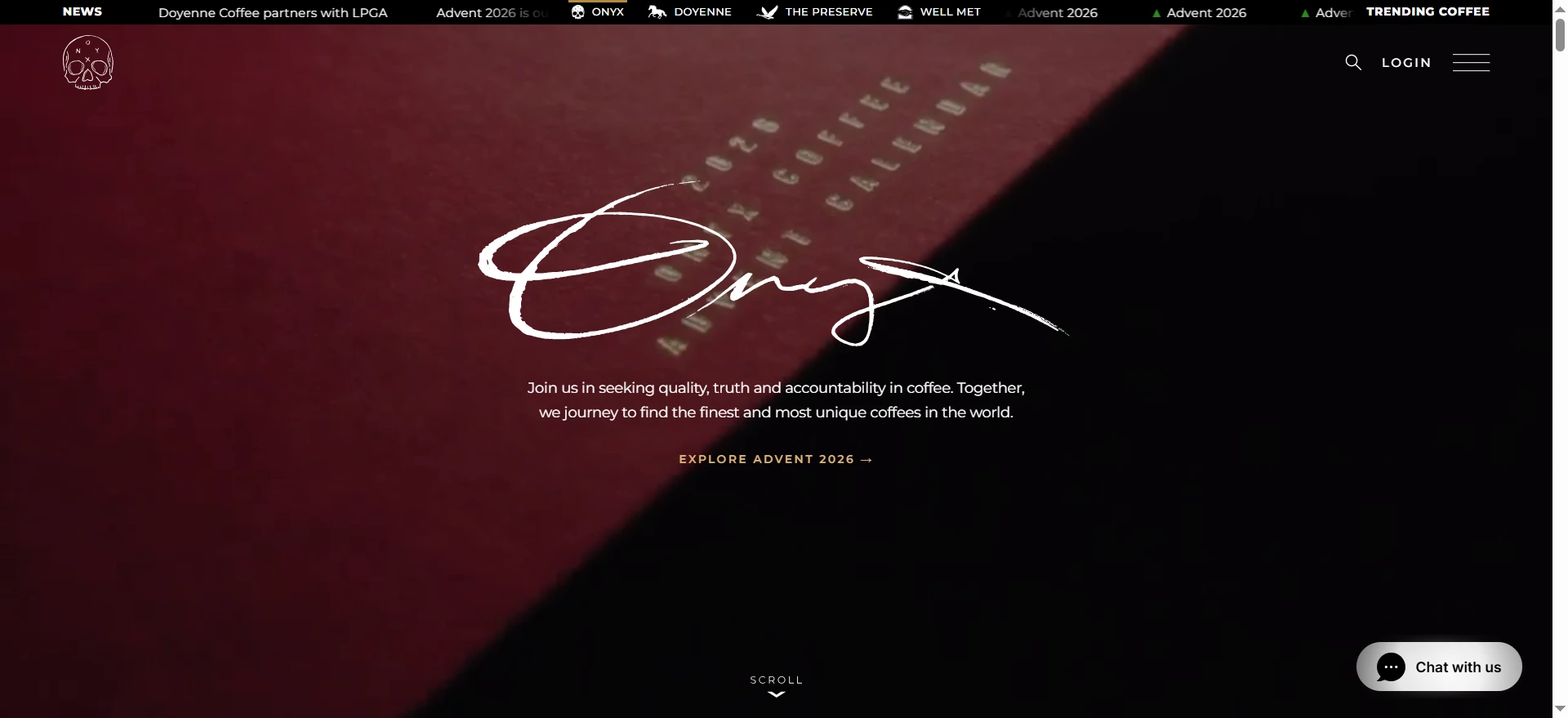
Onyx treats every coffee like a feature story. Coffees are listed with tasting notes, and featured lots come with details about the producer, the farm, the altitude and how the coffee was processed. The homepage invites visitors to “Join Our Pilgrimage” and carries its tagline about “seeking quality, truth and accountability in coffee.”
The navigation is broad (coffee, subscriptions, tea, chocolate, goods, wholesale, locations and learning), yet it stays organized. Café locations around Northwest Arkansas are listed by name, so local visitors don’t have to hunt. Onyx also highlights a Webby Award for Best Ecommerce Website in 2025.
What to borrow: Give every coffee its own page with tasting notes and origin details. Specialty coffee buyers care about where it came from, and unique product copy is great for SEO.
2. Blue Bottle Coffee
Website: bluebottlecoffee.com
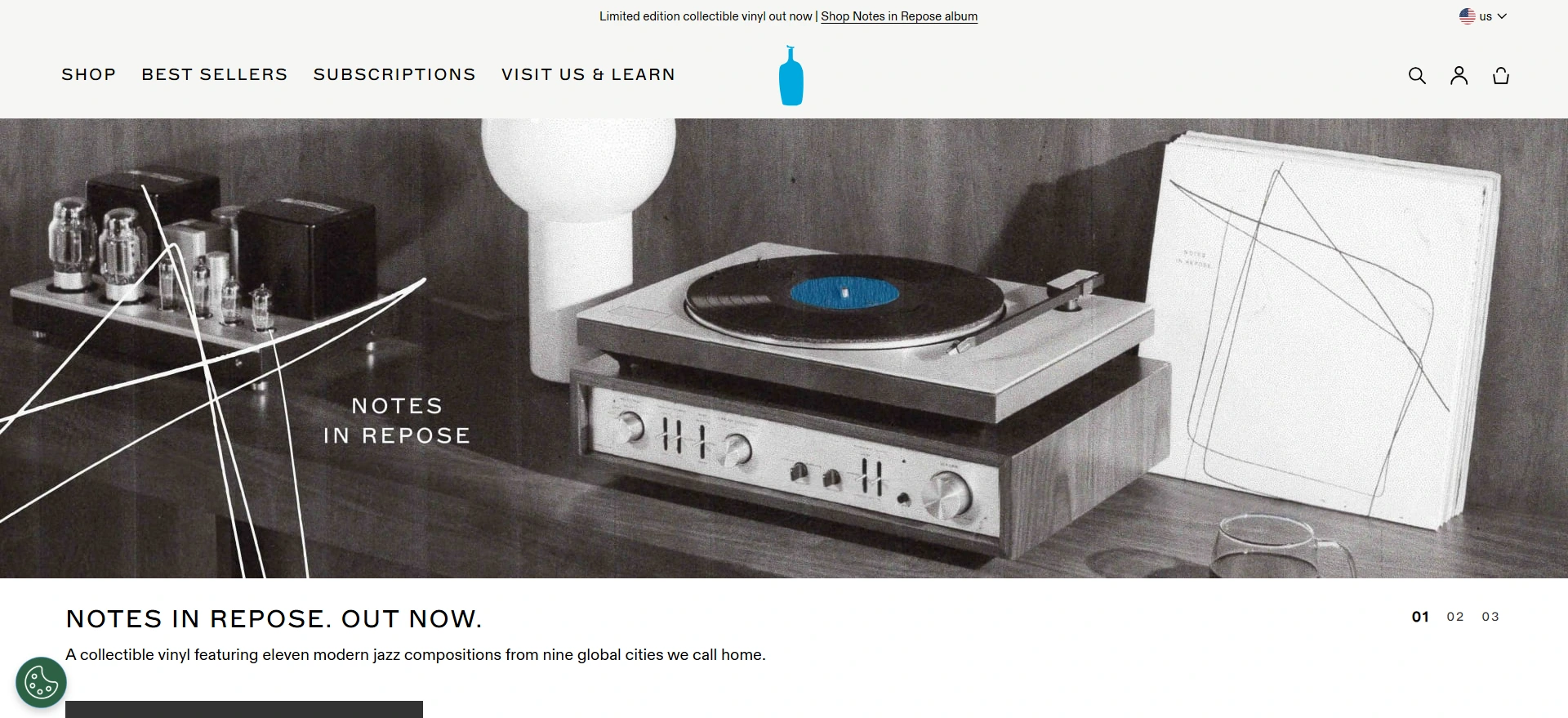
Blue Bottle’s navigation is short and clear: Shop, Best Sellers, Subscriptions, and “Visit Us & Learn.” The subscription section doesn’t just say “subscribe and save.” It lists the actual benefits, such as a flexible schedule you can pause or cancel, free shipping on subscription orders and early access to launches.
The homepage also has clear buttons to “Find a Cafe” and “Explore Brew Guides,” and the footer links to accessibility information and virtual classes.
What to borrow: If you sell subscriptions, list every benefit in plain words. “Pause, change or cancel anytime” removes the biggest worry people have before signing up.
3. Monmouth Coffee
Website: monmouthcoffee.co.uk
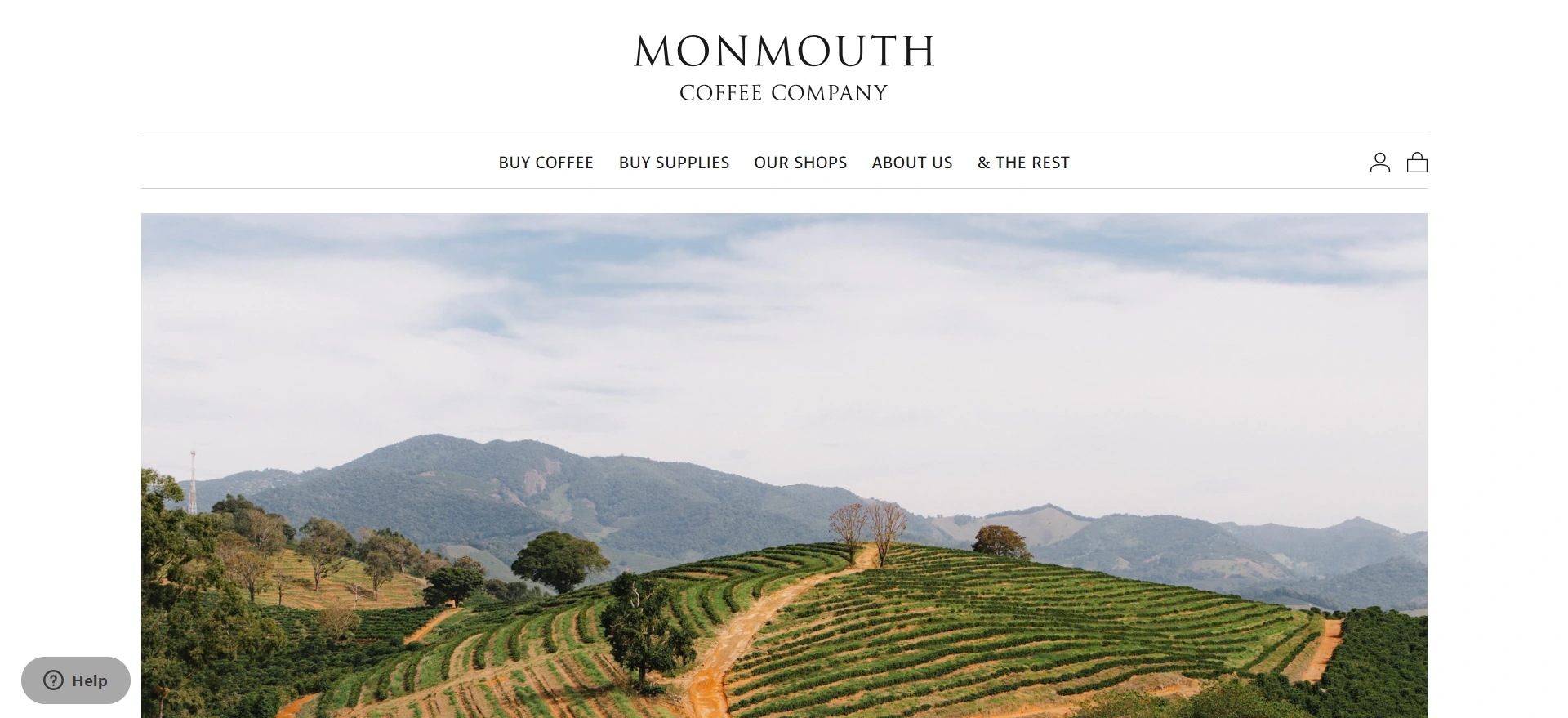
Monmouth’s website is refreshingly simple. It opens with a short statement about sourcing from single farms, estates and cooperatives, then goes straight to the coffees. Each listing shows the country, the producer, flavour notes, roast level and a starting price, with a link to more farm information.
Below that are the three London shops (Covent Garden, Borough and Bermondsey) with full addresses. When a shop is closing on certain days, the notice appears right there next to the address.
What to borrow: You don’t need a big website. A short page that shows your coffee, your addresses and any closures will beat a slow, cluttered site every time.
4. Proud Mary

Website: proudmarycoffee.com.au
Proud Mary is a Melbourne roaster that ships internationally, and its website shows both sides of the business. A “Visit” section covers the Proud Mary Café and Aunty Peg’s, and the opening hours for each are listed on the homepage.
Coffees are grouped by flavour style (Mild, Curious and Wild, plus Blend, Deluxe and Decaf), which is easier for a casual buyer than a list of origins. A currency selector helps overseas customers, and there’s a loyalty and rewards program for regulars.
What to borrow: Group your coffees by taste, not just by country. Most customers know whether they like something mild or bold long before they know their favourite origin.
5. Counter Culture Coffee
Website: counterculturecoffee.com
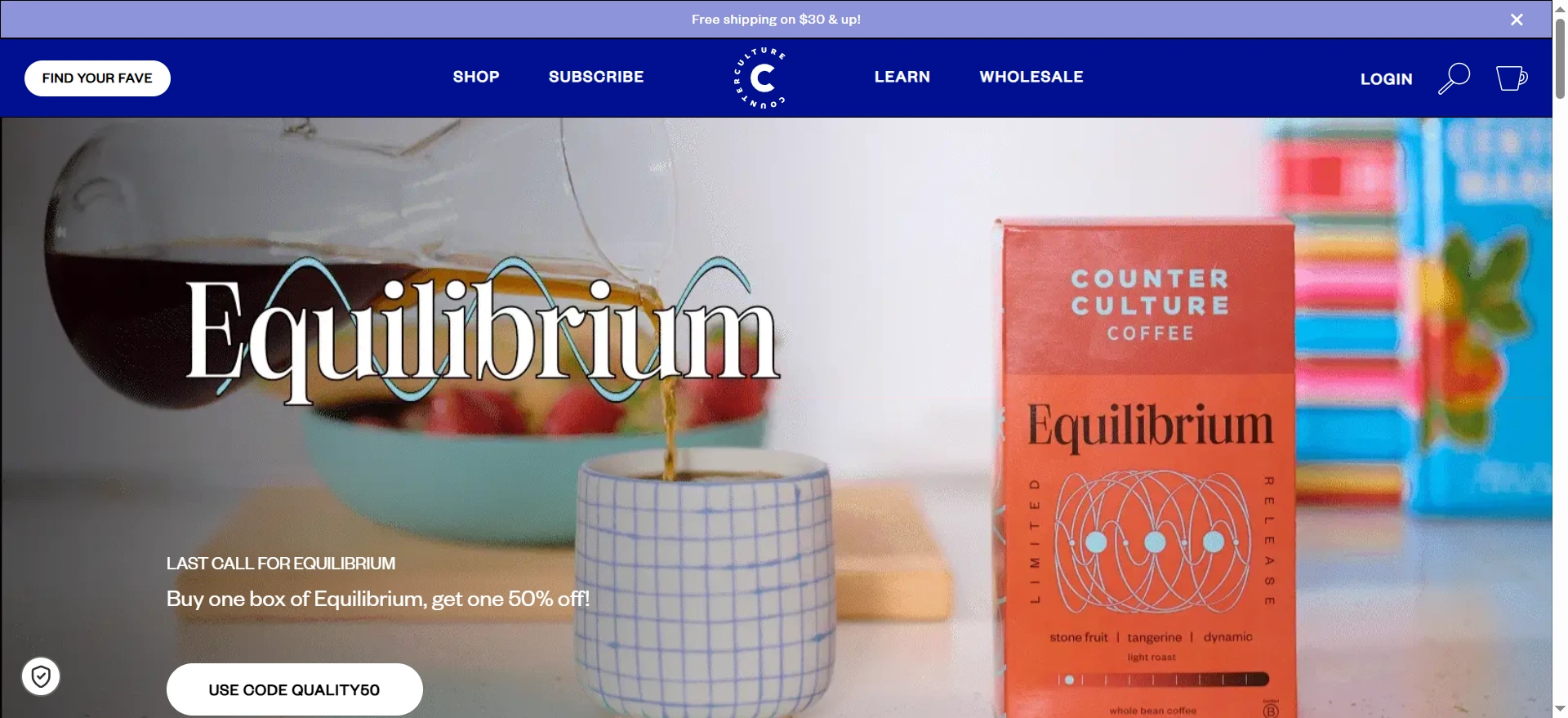
Counter Culture builds trust through openness. Its “Traceable from Seed to Cup” section links to published transparency reports, and the site displays its B Corp certification. These are details many roasters claim, but few show.
The site also does a lot for the home brewer: brew guides for pour-over, French press, AeroPress, espresso, cold brew and more, plus a quiz that matches you to a coffee. A training centers page supports the wholesale side of the business.
What to borrow: If you have a sourcing or sustainability story, back it up with something people can check, like a report, a certification or the names of the farms you buy from.
6. Verve Coffee Roasters
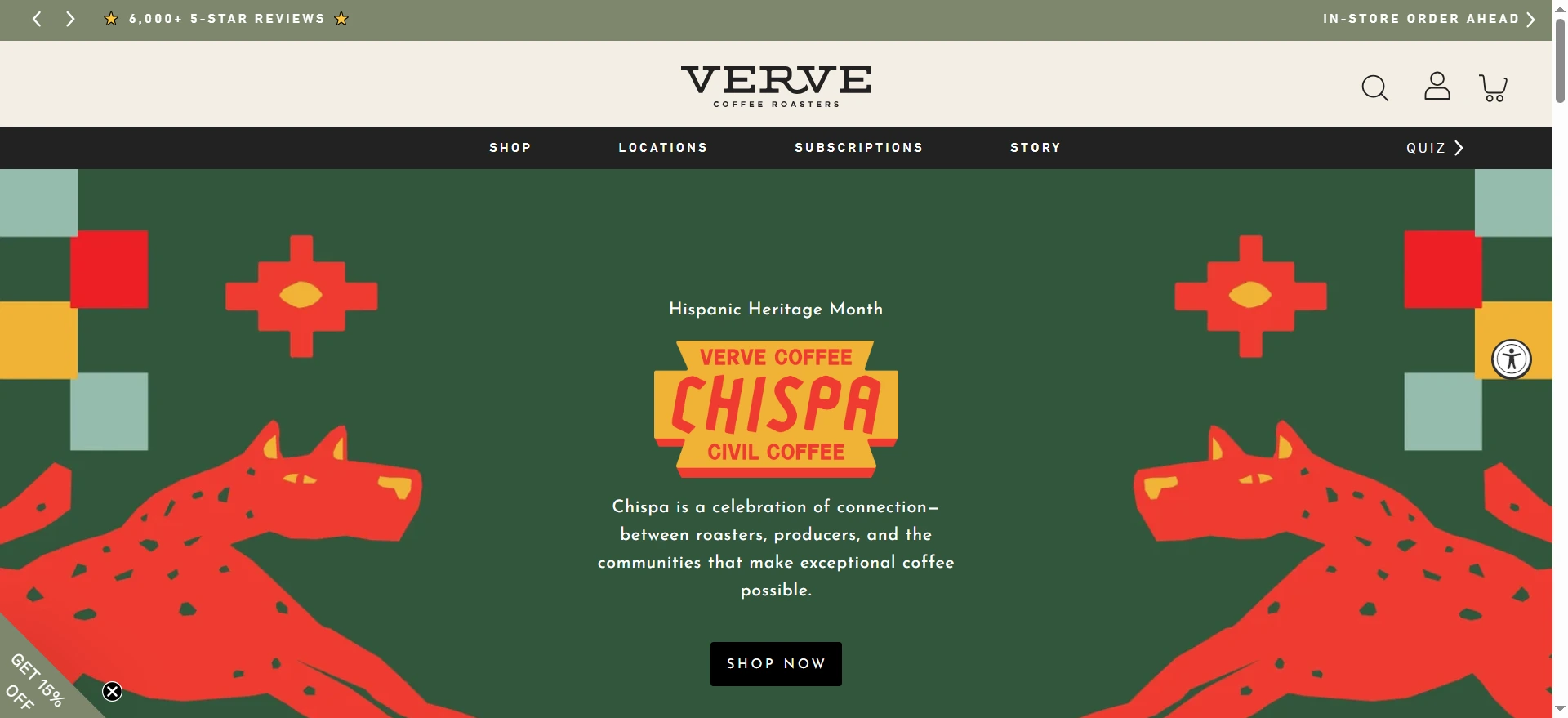
Website: vervecoffee.com
Verve uses a short coffee quiz, promoted with “Find your match,” to help new customers choose. It’s a smart move for a roaster with dozens of coffees, because it turns an overwhelming list into a few simple questions.
The header also includes an “Order Ahead” link for café customers, separate from the online shop. Live chat, email and phone support are listed with hours, and a blog and sourcing section (“Farmlevel”) sit in the footer.
What to borrow: If people struggle to choose, help them. A short quiz or a “Start here” collection can lift sales and reduce returns.
7. Market Lane Coffee
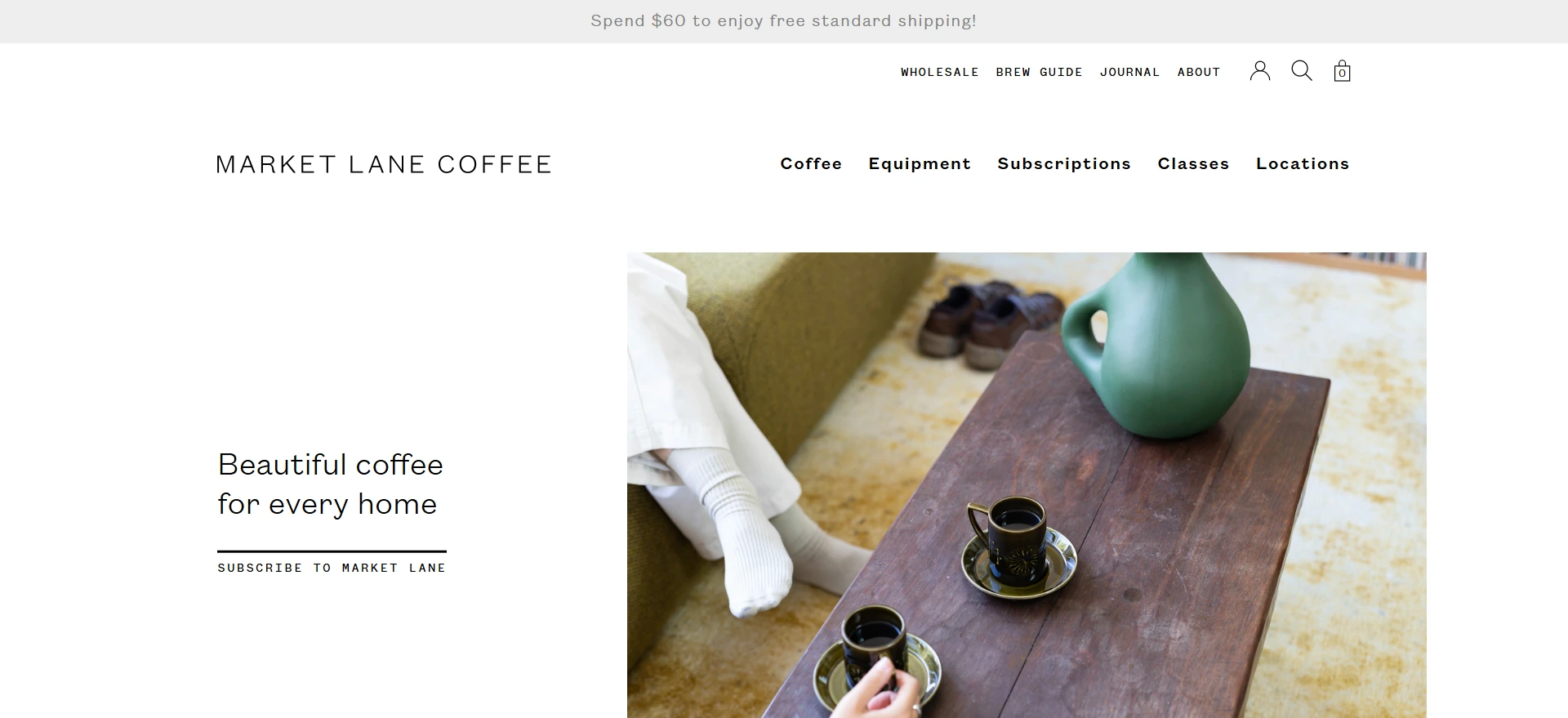
Website: marketlane.com.au
Market Lane’s homepage leads with “Beautiful coffee for every home,” but the site goes well beyond selling beans. Barista classes, a brew guide and a journal with interviews and anniversary stories give people reasons to come back.
The footer lists every location by name, including the roastery and several Queen Victoria Market sites. B Corp certification has its own section, and a land acknowledgement appears on the homepage.
What to borrow: Classes and articles turn a shop website into a resource. They also give you fresh pages to rank in search and share on social media.
8. Ritual Coffee Roasters
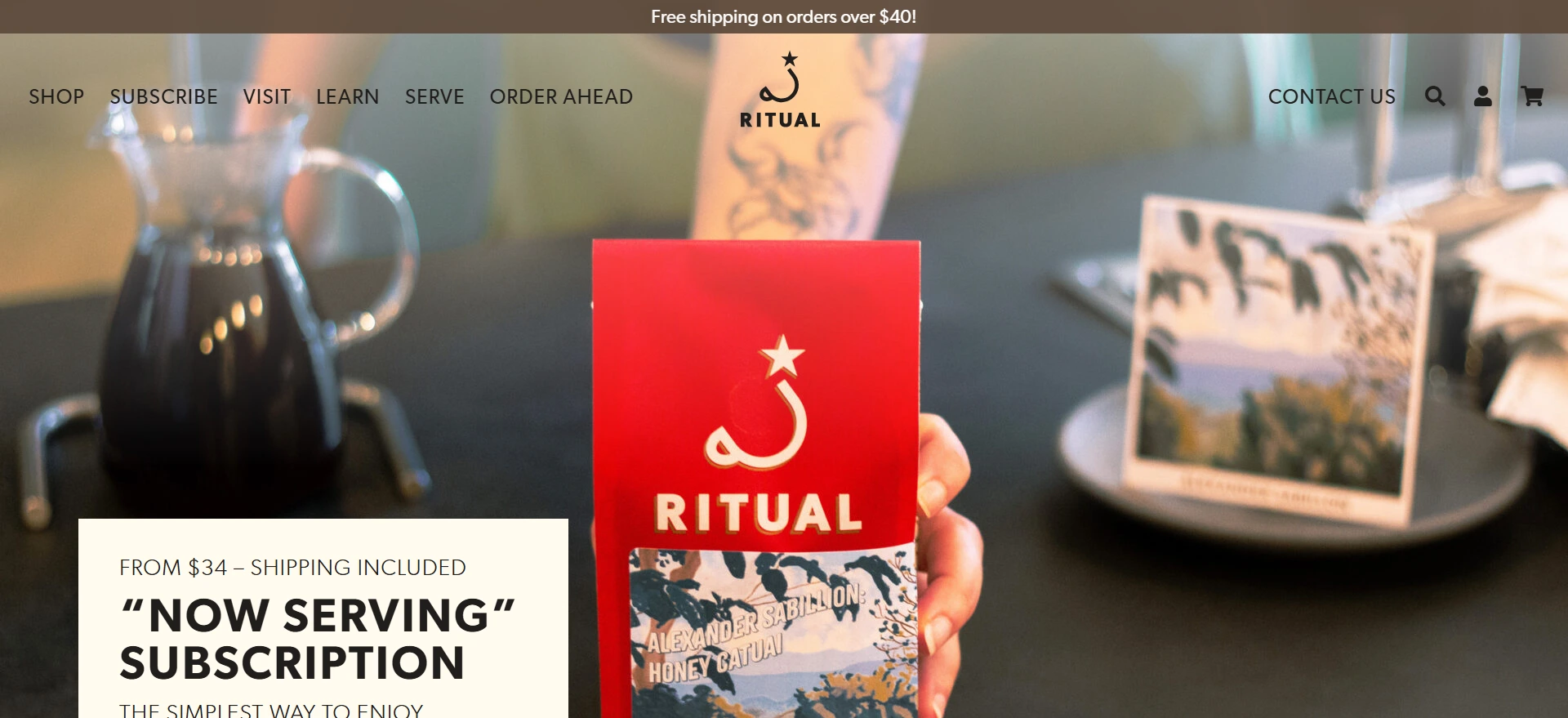
Website: ritualcoffee.com
Ritual calls itself “A San Francisco original since 2005,” and its navigation makes visiting easy. The “Visit” menu lists each café (The Mission, Hayes Valley, Napa and SFO Airport) plus the roastery and stockists, so you can go straight to the location you care about.
“Order Ahead” sits in the main navigation, and a separate “Serve” menu groups wholesale, catering and canned coffee for business customers.
What to borrow: Give each café its own page, linked from the main menu. Location pages help people find your hours and directions, and they help you show up in local search.
9. La Colombe
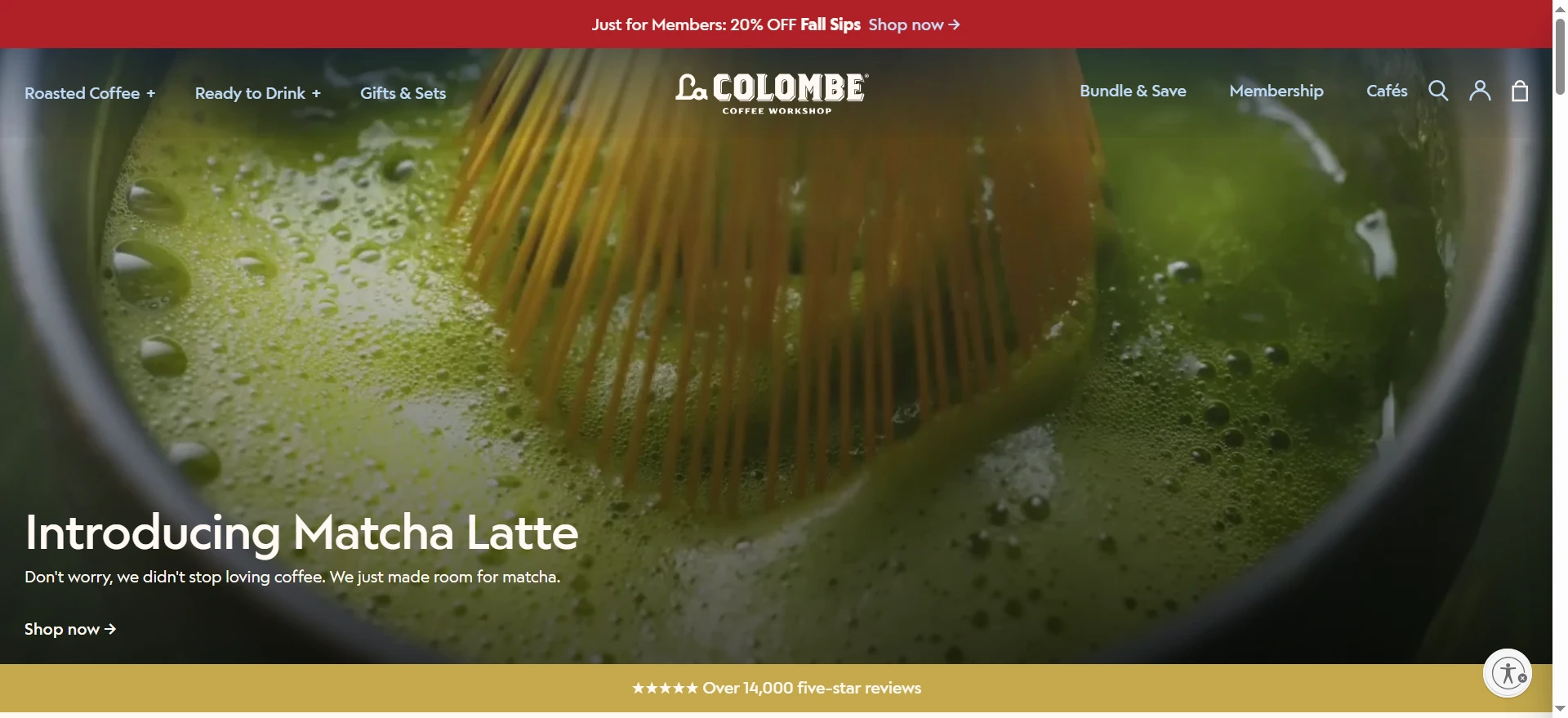
Website: lacolombe.com
La Colombe sells roasted coffee, but it’s also known for canned drinks like its Draft Latte. The website gives each line its own menu: “Roasted Coffee” and “Ready to Drink” are separate, with their own categories underneath.
There’s a membership program, bundle discounts, a “Find in Store” link for the canned products and a “Cafés” section for visitors. The brand line “Roasted with love in Philly” keeps the local roots visible.
What to borrow: If you sell more than one kind of product, give each its own clear path. Someone looking for cold brew cans shouldn’t have to scroll through whole beans.
10. Stumptown Coffee Roasters
Website: stumptowncoffee.com
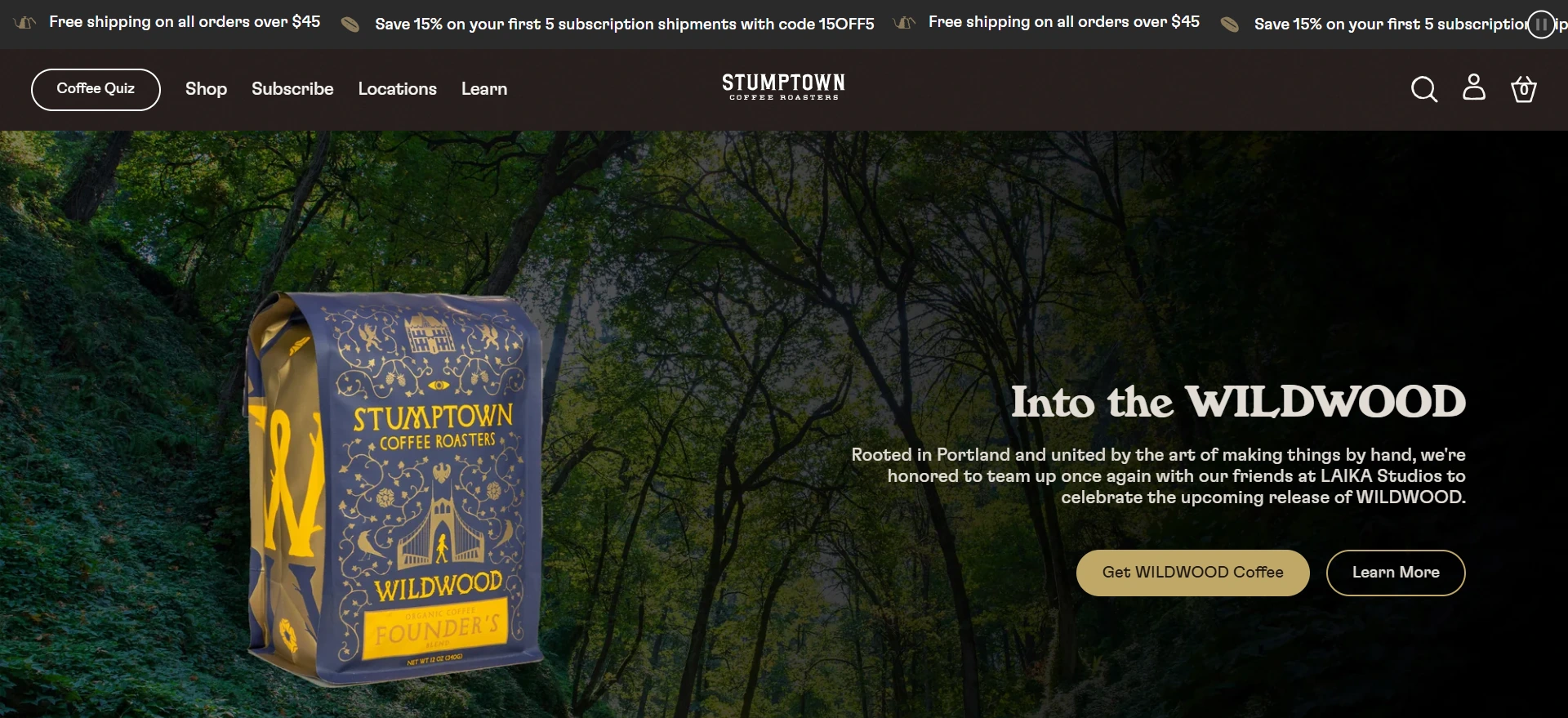
Stumptown’s products are sold in cafés and grocery stores as well as online, so its site includes a “Find Near Me” product finder. The navigation also covers a coffee quiz, brew guides, locations, cold brew and a “Serve Stumptown” section for businesses.
Recent homepage campaigns, like a film collaboration, show how a coffee brand can use its website for storytelling, not just sales.
What to borrow: If your products are sold in other stores, help people find them. A simple stockist list or map keeps customers from giving up.
What every coffee shop website needs
Across these 10 sites, the same basics show up again and again:
- Hours and address on the homepage or one click away. Keep them consistent with your Google Business Profile.
- A page for each location. It helps visitors with directions and helps you rank for searches like “coffee near me.”
- Coffee pages with tasting notes and origin. Unique descriptions beat copy-pasted importer text.
- A clear subscription offer. Explain the schedule, the savings and how to pause or cancel.
- Order ahead or online ordering, if you offer it. Put the link in the header.
- Help for people who can’t choose. A quiz, a “best sellers” collection or flavour groups all work.
- Local business schema. Structured data for your cafés (CafeOrCoffeeShop) helps search engines understand your hours and locations.
Running a restaurant too? See our list of the best restaurant websites for more ideas.
How much does a coffee shop website cost?
It depends on what you need. A café site with your menu, hours, locations and photos is a much smaller project than an online store with subscriptions, wholesale accounts and shipping rules. Your platform choice matters too. WordPress with WooCommerce and Shopify both handle coffee subscriptions well.
If you’re planning a new coffee shop website or want to add online sales, tell us about your project and we’ll give you a clear, fixed-price quote.
Frequently asked questions
What should a coffee shop website include?
Your hours, address, menu and photos, plus a clear way to order or visit. If you roast or sell beans, add product pages with tasting notes, and a subscription option if you offer one.
Should a coffee shop use WordPress or Shopify?
Both work. Shopify is simple for selling beans and subscriptions. WordPress with WooCommerce gives you more control over content, such as blogs, location pages and classes, which helps with SEO.
Do coffee shops need online ordering on their website?
If you get a lot of takeaway orders, yes. An “Order ahead” link in your header reduces queues and phone calls. Many cafés link to a dedicated ordering platform rather than building it into the main site.
How can a coffee shop rank higher on Google?
Keep your name, address and phone number consistent everywhere, create a page for each location, add local business schema, and keep your Google Business Profile up to date with photos and hours.
Planning a coffee shop website? PosySites designs and builds café and restaurant websites and WooCommerce stores for cafés and roasters, with local SEO built in. Start a project.
